St. Michael's, Killavoggy
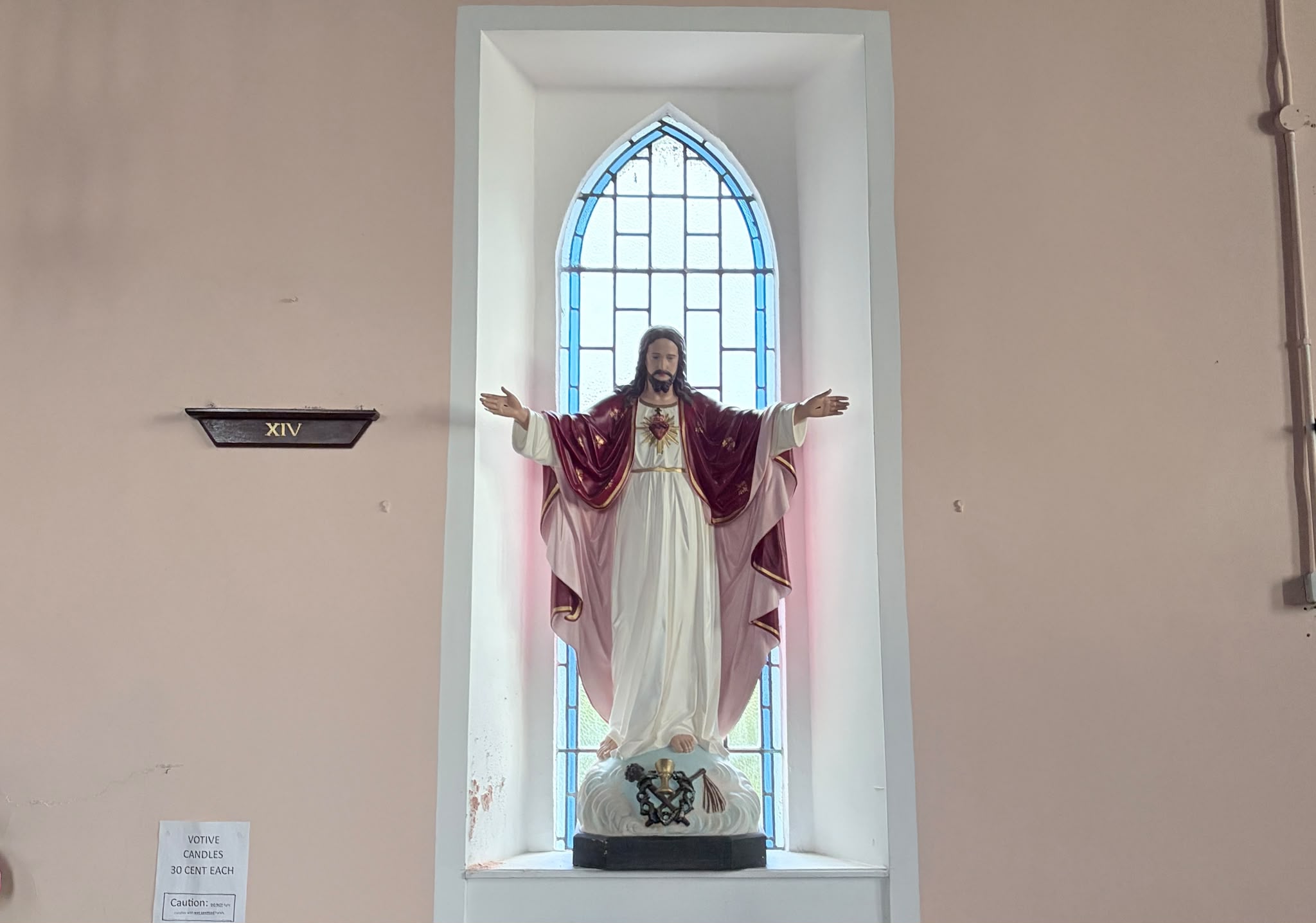
St. Michael’s Church is a historic rural Catholic church serving the Killavoggy and Dromahair community since the late 19th century. Built in 1883 and consecrated in 1881, it features a striking blue‑and‑gold stained‑glass window of St. Michael the Archangel and a beautifully crafted Lourdes Grotto first erected in 1959. Over the years, the church has been lovingly restored, preserving its traditional character while remaining a vibrant centre of parish life within the Killenummery and Killavoggy parish.


St. Mary's, Killenummery
St. Mary’s Church is a long‑established Catholic church serving the Killenummery and Dromahair community. Online records indicate that the church was built in 1859, making it one of the older rural churches in the region. It underwent a significant renovation in 2002, modernising the building while preserving its traditional character. The parish marked its 150th anniversary in 2010, celebrated with a Parish Mission led by the Ceili Community; one of the few documented historical events connected to the church. St. Mary’s is part of the Killenummery & Killery Parish, where Fr. Vincent Connaughton became administrator in 2008 and parish priest in 2010.

St. Teresa's, Ballintogher
St. Teresa’s Church is the main Catholic church serving the village of Ballintogher and the wider Killenummery & Killery parish. The church was built in 1932, replacing an earlier chapel that had served the community for many decades. Its construction marked a significant moment in local parish development, providing a larger and more modern place of worship for the growing population of Ballintogher and surrounding townlands.
The church is dedicated to St. Thérèse of Lisieux, reflecting the strong devotion to the Little Flower that spread throughout Ireland in the early 20th century. Over the years, St. Teresa’s has undergone various improvements and interior enhancements, It remains an active centre of parish life, hosting regular Masses, sacraments, and community gatherings.
Cill an Iomaire
In Irish, Cill an Iomaire means “the church of the ridge.” As the most northerly part of the diocese and separated from the rest by what Bishop MacNamee quaintly called “three radio miles,” it is often thought of as our island parish. Straddling counties Leitrim and Sligo and bordering Lough Gill, the area naturally evokes images of Bee-Loud-Glade-like shoreline and the soft lap of lake water.
Several explanations have been offered for its inclusion in the Diocese of Ardagh. These range from historic Conmaicne connections to the possibility that diocesan boundaries, drawn after the Synod of Kells in 1152, were influenced by Bishop Magrath O’Moran—who may have been linked to the local erenagh family. Another suggestion points to the displacement of the Calraighe by the Conmaicne from ancient Longford in times long past.
Killenummery, in the barony of Dromahair, comprises 23,183 statute acres and had a population of 1,240. Christian origins here may even trace back to St. Patrick, though more certainly to St. Hugh, who ministered by unusual routes to avoid detection by the Redcoats. The old Church of Ireland still stands, and nearby are the remains of a 14th-century nunnery that was later used as a hospital.
Local tradition also recalls Aodh Béo, who passed through Tullynascreena—now the site of the mass rock—on his route from Ard-Carn through Inis Mac Grath to Ballintogher. During the Penal era, Mass was celebrated using that flat-topped rock as an altar. To mark the parish Millennium, Mass was celebrated there again; in preparation, people processed to the rock, and a group reenacted the Penal-era practice by coming up the stream in period costume.